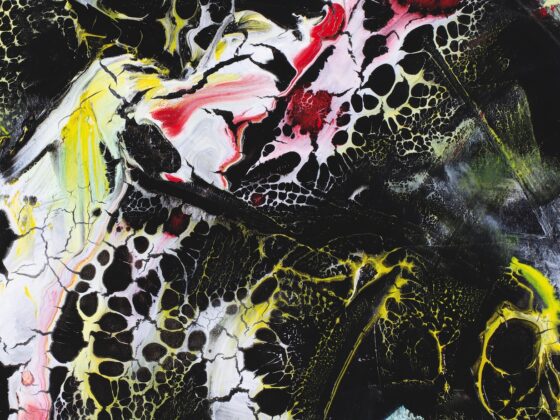
I recently released my new album, Forces, Reactions, Deflections, on the Quiet Details label.
The album unfolds as a series of subtle transformations — forces that collide, react, and ultimately deflect into new, unexpected directions. It’s intended to be a work of restraint and resonance, inviting the listener into a space where movement and stillness coexist, and every tone feels alive with quiet intention.
But how did I record it? What were the sound sources? What were the intentions behind the release? Here follows an extended version of an interview I presented for the label, heavily illustrated with images of the making of this album.
Forces, Reactions, Deflections continues my exploration of how we listen — to the world, to others, and to ourselves.
Please tell us a bit about your background and history in music
Music was a constant in my household as I grew up, from the radio, vinyl LPs to cassettes. My brother and I would create radio shows for my mum, hiding behind the sofa and playing records and then poking our heads up to announce each tune. I can’t recall a time when music wasn’t playing, be it The Beatles or Gilbert O’Sullivan.
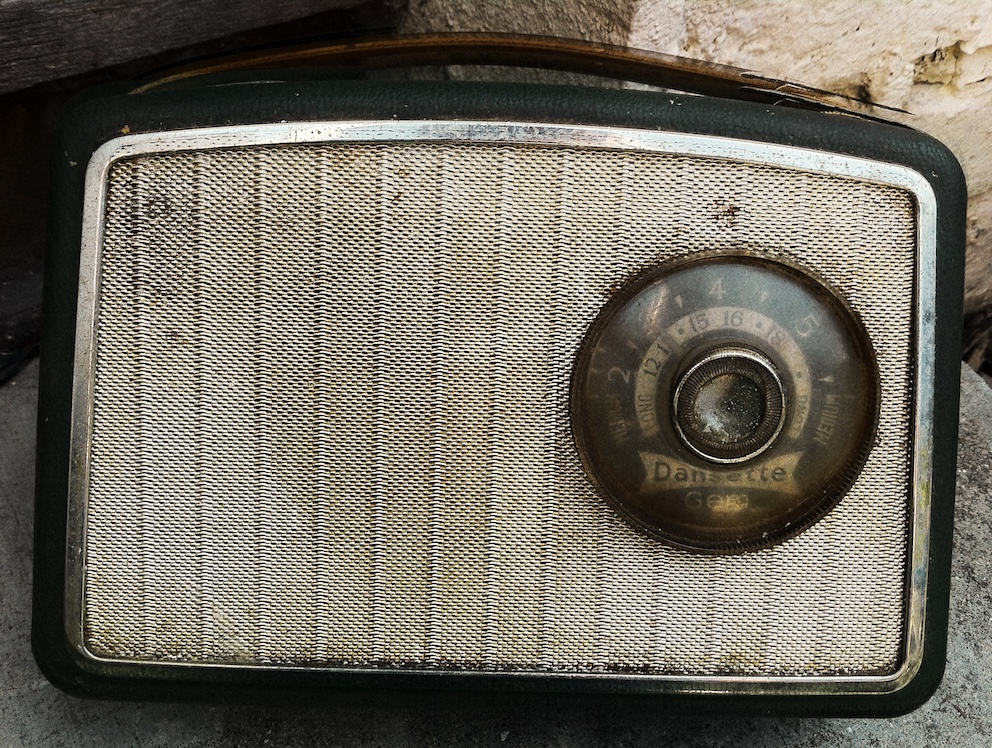
I would listen to music on the imposing but grand radiogram in the living room, or my nan’s old Dansette radio in the kitchen. I remember marvelling at the glowing red valves in the radiogram when it was switched on, which was a combination of a radio and record player in one. I was obsessed with the graphics across the radio screen, etched in a modernist design, picking out exotic locations that meant nothing to a little South London boy. Strasbourg, Hilversum, Brussels, Toulouse, what or where were they?
To this day, I still treasure some of the records from my childhood, with my name naively scrawled across the sleeves to confirm ownership! They are rather a bizarre collection, from Rupert the Bear and the Fire Bird, 1812 and other Famous Overtures and Telstar from Tornados. My music tastes were clearly eclectic from very early on!
Some of the records still resonate with me today. The Action Man is Here 7” was especially memorable for the B-Side of ‘authentic battle sounds’ which presented a series of explosions, machine gun shots and grenades. As the sleeve succinctly noted ‘the patrol radios for artillery support and land-based batteries and naval armour put down a 30 second concentration with the big stuff.’ Amazing! Interestingly, all these years later I can still today remember all the words to the ‘Official Action Man March’ on the A-Side. Goodness knows how many times I listened to that record at the time then!

More disturbing vibes came from Sparky’s Magic Piano, which presented the audio story of a little boy with an overactive imagination. The sound of the talking piano, generated by Sonovox, was generated by attaching small transducers to the performer’s throat to pick up voice sounds and transforming them. I recall finding the piano ‘voice’ really eerie, perhaps not helped by the humanisation of a static object, the piano itself. The imagination of a child is a very powerful thing indeed.
Now combine listening to Sparky’s Magic Piano with the Clangers TV series, which was a children’s programme using stop-motion animation and featuring tiny creatures that lived in space. Since space exploration was topical at the time of the show’s inception, the producers decided it would be set in outer-space, and the ‘Clanger’ originated from the sound made by the metal plates that covered the creatures’ burrows when they were opened. This was completely otherworldly to me.
I learnt to play the piano when I was about 10-12 years old, but lessons had to be stopped as my mum sadly couldn’t afford to pay for them (50p in a lesson). I was also fortunate to have had an amazing music teacher at secondary school who introduced to the works of John Cage and others at a super early age and opened up my mind enormously.

The cassette, in and of itself, was also incredibly important to me. It wasn’t just a format you used, but a philosophy—a tool for capturing the overlooked, distributing the uncommercial, and turning private signals into public art. Carrying a Walkman or a small recorder allowed me to capture the world in a pocket-sized format, creating a mobile sketchbook of sound. Recordings of intercepted conversations, urban ambience, and personal moments often carried this lo-fi imperfection and very early became part of my sonic aesthetic.
I recorded everywhere, holidays, in school, on the Tube, crossed telephone calls, and whatever lay in between. More surprisingly, I’ve still got all these cassettes, numbered and in ordered, offering up sonic memories of my early teenage years onwards!
Indeed, those cassette experiments became the raw material for my first works and performances in the 1980s and later on my releases as Scanner. By playing back these recordings in live contexts, I could transformthe cassette from a private listening device into a public art form. This leap — from capturing signals on cassette to broadcasting them in galleries, clubs, and records — effectively crystallised the Scanner identity.
Please can you describe a bit about your general philosophy and process as an artist?
At heart, it remains a story of constant discovery and revelation.
I believe the world is already absolutely filled with music. It murmurs through walls, across airwaves, in overheard fragments and the vibrations of buildings. My task is not to compose but to reveal, to bring hidden signals into focus.
Technology, for me, is never distant or cold. It is an extension of the ear, a lens that captures the fragile traces of human presence — a glitch, a hiss, a fleeting word between strangers.
I embrace imperfection, because life itself is imperfect. Every dropout, every interruption, carries memory within it. I thrive on the accidental, the unexpected, the collapse of technology almost.

Art should not live only in galleries or concert halls. It should spill into daily life: in stations, stairwells, elevators, streets. The ordinary is already extraordinary when reframed with attention. Hence my focus over the last 32+ years of creating work in all manner of locations and in collaboration with different artists, from architects to fashion designer, car manufacturers to ballet companies.
Collaboration is dialogue, and dialogue is growth. Boundaries between disciplines are made to be crossed, dissolved, ignored. Remember that the banal can often be quite profound. One just needs to listen differently.
To listen is to discover. To record is to remember. To share is to transform.
What does quiet details mean to you and how did you use that to approach this album?
I’ve always seen the label as a way for artists to perhaps take a minor side step from perhaps what they might ordinarily explore. I saw this as a chance to make a full-length album that explores in depth something almost imperceptive – the subtle, often unheard movements of a stainless-steel staircase in my home. I wasn’t interested in producing just a series of musical pieces that form a story but to focus on something unique and unusual, which would be presented in a most elegant manner.

Please can you give us an overview of your studio and favourite instruments?
I live in an old textile factory. It’s not a dark immersive space, but one filled with light and character. I work best in daylight, and for those know me, they are familiar with how I like to begin work early and finish early and enjoy to work best in daylight. The windows are 3 three metres high and the ceiling 5 metres high. You’ll never find me in here after 17.30 or at night!
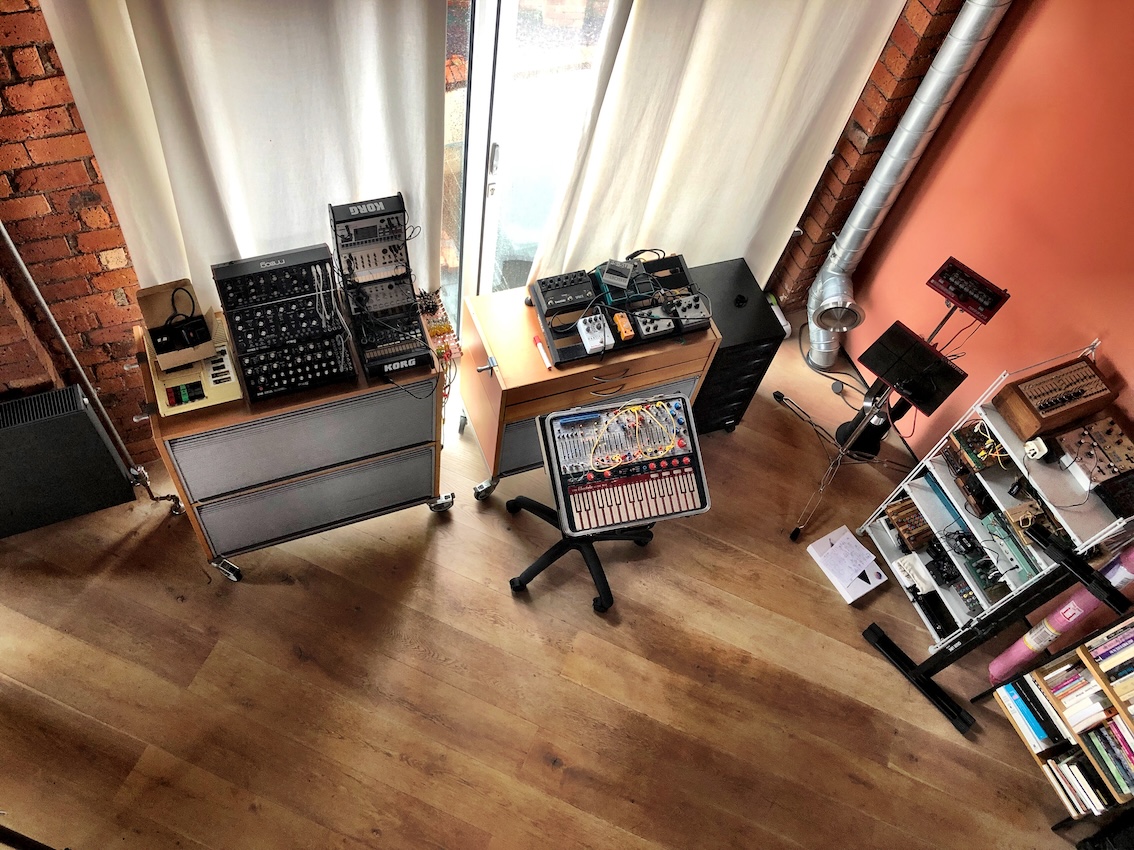
It’s never been set up like a traditional studio, with everything wired in ready to connect at the switch of a button. That doesn’t inspire me in terms of creativity. In some ways, it’s closer to a kitchen stocked with a variety of spices and flavours, tools and devices to draw upon to cook a fine meal. You pick and choose the items you want to set a particular mood, or to create a unique taste.
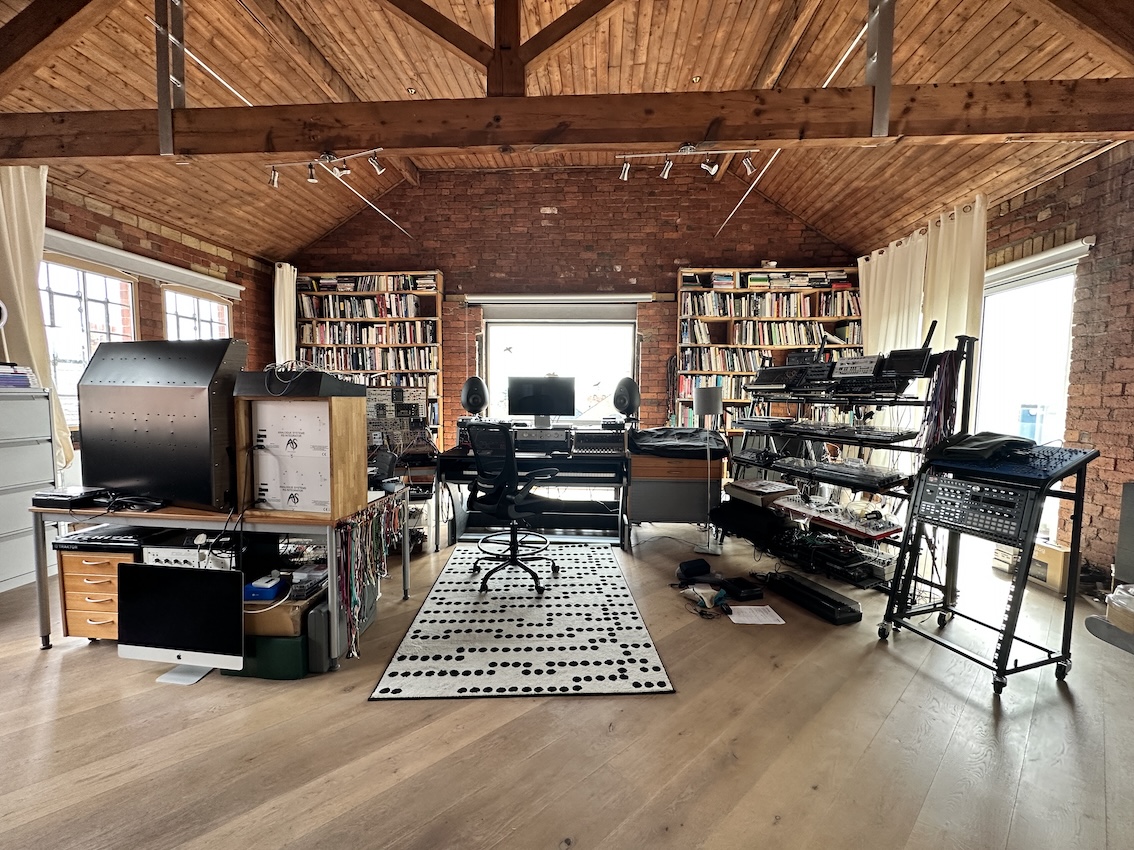
It most definitely isn’t a place of control, but of discovery. I prefer instruments that misbehave, recordings that carry accidents, and tools that open up chance encounters. In that sense, my favourite “instrument” is the world outside the studio — the endless flux of sound waiting to be noticed.
It’s a working space, part laboratory, part archive, part playground. It’s filled with objects that encourage me to listen differently rather than simply to make noise louder! The most appealing instruments are those that continue to surprise me every time, such as the Ciat Lonbarde suite of instruments, the Buchla 200e and so on. I remain as enthusiastic as ever every time I sit in here!
Please can you give a quick breakdown of how you made each track?
Every track uses the same source materials – this stainless-steel staircase that weaves through my building. Guests often comment on the beautiful sound it makes as you walk up and down it, like gentle rainfall as the steel cables softly vibrate through the structure.

I used a geophone microphone which, unlike traditional microphones that pick up vibrations in the air, this actually captures vibrations of the ground, buildings, or objects instead of airborne sound. These kinds of microphones are often used to record the resonance of a bridge, the hum of machinery through metal, or footsteps transmitted through the floor. Or even earthquakes apparently!
I like them because they reveal a world of sounds that we normally don’t hear. Instead of birdsong or voices, you can capture the rumble of underground trains, the creak of structures, or the micro-movements of surfaces. As indeed, in this situation my staircase.
01 Start Moment
Here I gently tape on the balustrades installed along the top of the staircase with a rubber mallet, and run it through a delay pedal. I am also running a radiator brush made of soft bristles in between the metal poles on the structure. The bass melody is a sample of the step vibration filtered and played with a MIDI keyboard.
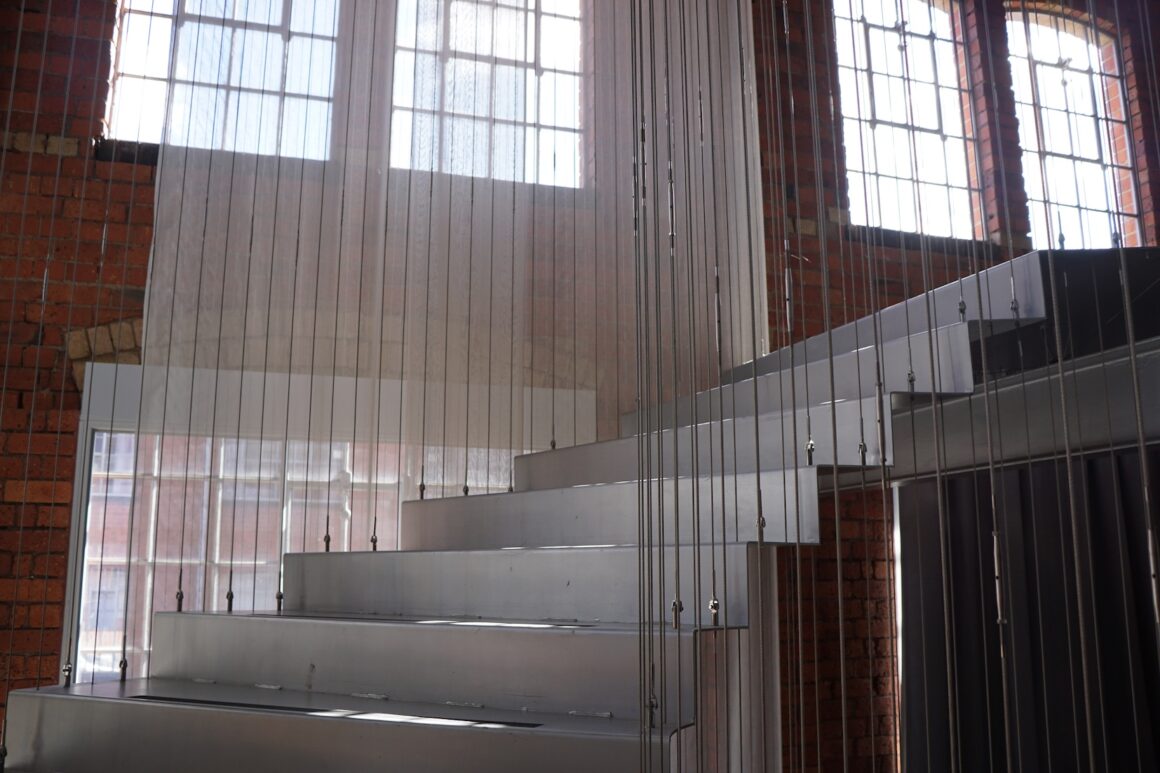
02 Riser Beam Connection
Gently beating on the floor of the staircase and again sampling the sounds in between the balustrades run through filters and a reverb pedal to literally play a melody with a MIDI keyboard.
03 Base Plate
Here I am using this radiator brush again, gently pushing and pulling it through the supportive hanging wires of the staircase, creating this drone without any sense of attack, back and forwards. The low thuds are noises from walking up and down the staircase, randomly dropped into the track.
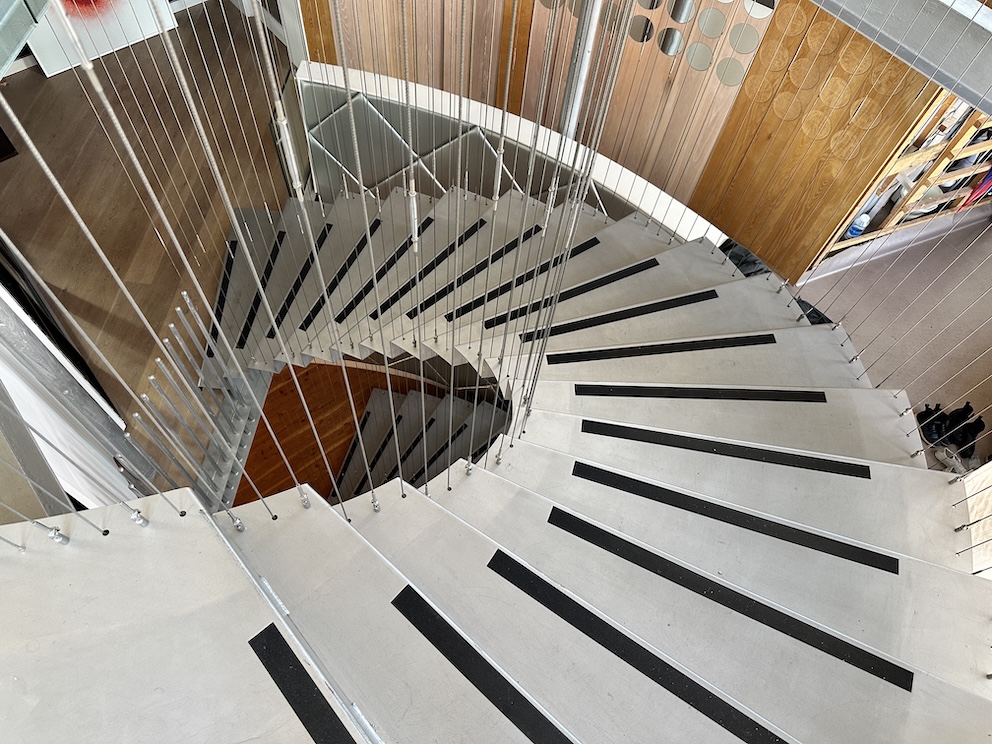
04 Grain Stress
You can hear me scraping the metal cables with a drum stick, then striking the balustrade with the soft mallet. The ethereal abstract melodic element are the same sounds pitched and filtered, then played with a MIDI keyboard in a software sample instrument.
05 End Moment, Wires
Running a piece of metal down the cables brings introduces this abstract piece. You can easily hear the resonating vibrations from this movement. A regular percussive sound maintains the structure which is the sound of my striking the balustrade and the floor of the staircase with a mallet.
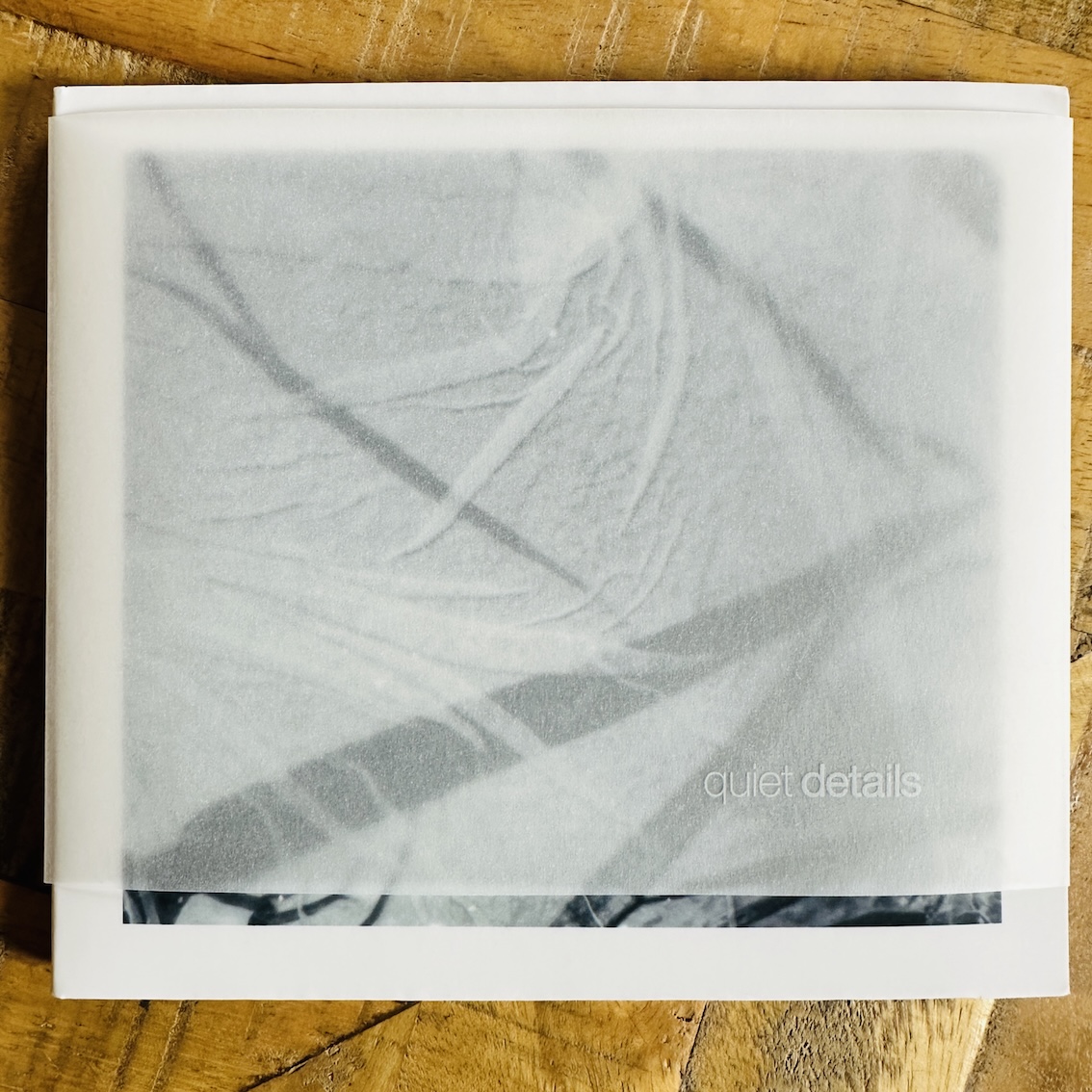
Forces, Reactions, Deflections is available as a Limited Edition CD and Print and accompany digital. The CD features a unique longform mix of the album.
Buy it here.
Many thanks to Alex at Quiet Details for his support and encouragement. Read more about the label, his mastering services and more at the Quiet Details website.