
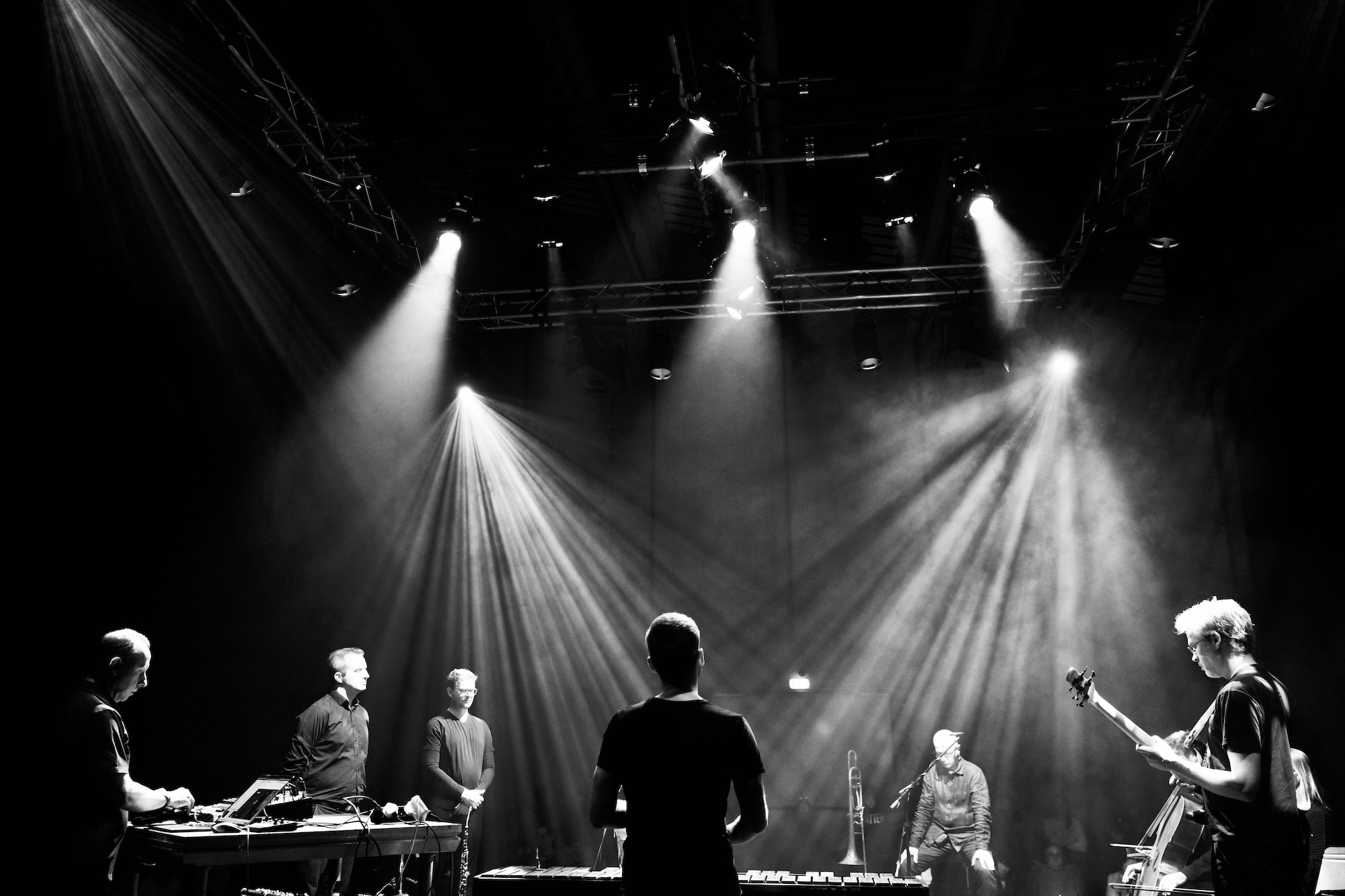
For more than two decades, Robin Rimbaud (Scanner) and Gareth Davis have shared a fascination with music that exists between worlds. In this conversation they explore curiosity, listening, collaboration, Stockhausen, Brian Eno, audience experience, and the creative possibilities that emerge when boundaries between genres, performers, and listeners dissolve.
GD: We first met in perhaps 2003 or so at the Whitechapel gallery in London. I seem to remember being absurdly late as the underground decided not to work. I had just been working with a group in Italy called Alter Ego, and you were working with them at the same time on the project called Scanner Scans Sciarrino. This was an instant trigger as it was putting together musical worlds, which for me has been an appeal for as long as I remember. So I probably sent you some annoying emails, we met, and even after my tardiness, here we are more than 20 years later, little difference in our combined sartorial elegance, making music together. Suffice to say, can you perhaps say more about this mixing of sound worlds and backgrounds from your perspective?
RR: I’ve always been fascinated by that meeting of worlds — where difficult, adventurous music collides with accessible ideas, and seeing what unexpected alchemy can emerge from it. The challenge is to invite audiences into demanding, often uncompromising music, but to present it in a way that feels seductive, immersive, and emotionally alive.
One of the enduring problems with contemporary music is that it often speaks to a very specific audience. Yet it’s important to recognise that so much of the music people love is born from these experimental roots. When you listen to the work of minimalist composer La Monte Young, you can immediately hear echoes of The Velvet Underground. When you listen to Terry Riley, you can hear the hypnotic pulse of trance music or techno. Suddenly the lineage becomes clear, and all the dots begin to connect.
I always feel that, if anything, what we try to do is illuminate those hidden connections — to build bridges between the avant-garde and the everyday, between sonic experimentation and popular culture.
GD: The first time we came together in what is now ‘Klang Systematiek’ was, interestingly, kind of triggered by the COVID-19 pandemic. People were locked inside for two years in some places. It was a mental wellbeing crisis. I was reminded of a Stockhausen piece from 1968, “Aus Den Sieben Tagen”, a work that stems from dealing with crisis. It is a text-based piece that leant itself to being able to bring together performers from different backgrounds who did not need the same fluidity or ability to read notated music yet who could each inspire the other person with their different approaches.
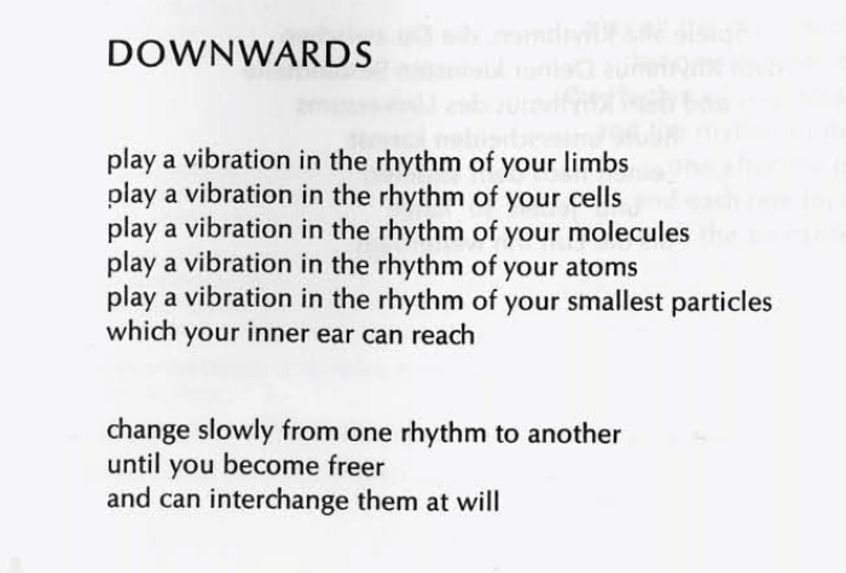
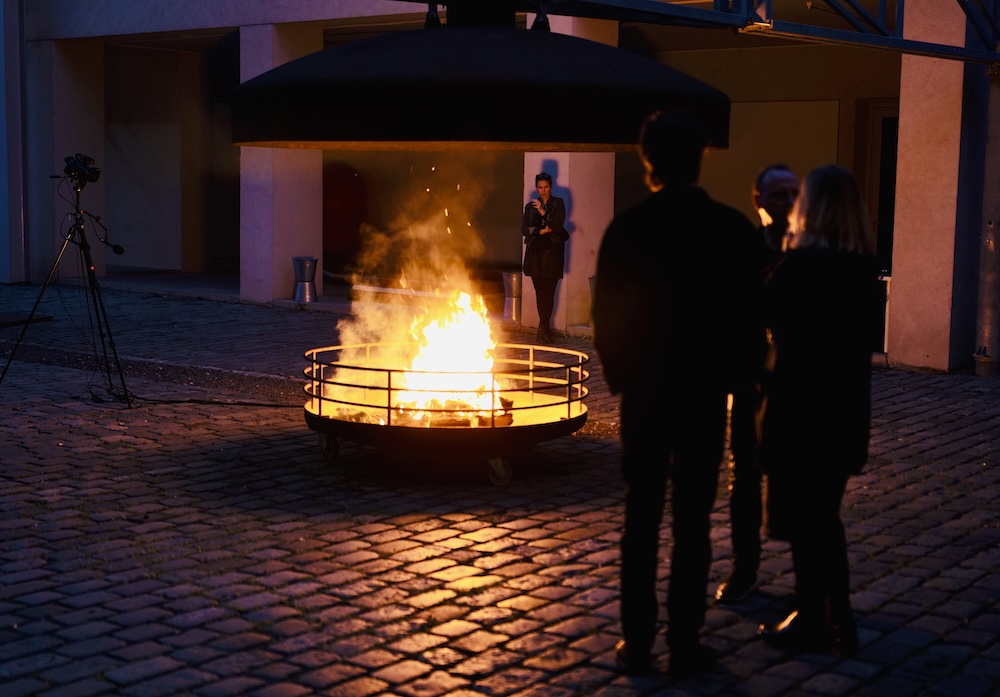
We came together first in this form to perform the work at the Rewire festival in Den Haag. This felt the start of something new, even if, from my side, this was a group of people I have known a long time, just generally not in the same situations. After playing Stockhausen the next works we performed together were Terry RIley’s ‘In C’ and La Monte Young’s ‘ ‘Composition 1960 #7’. Actually also composition 1960 #2 , which involves building a fire and watching it, which somehow was more a concern for me than playing any notes as I was sure the fire would not start. But I digress.
These works, different as they all might seem, feel like they also share a lot of similarities and putting them together in a bigger picture can create ways of listening that have the possibility to introduce people to unexpected results.
RR: It’s interesting how something like a crisis so often becomes the catalyst for new forms of collaboration. What you describe about returning to Stockhausen during the pandemic makes complete sense to me — “Aus den Sieben Tagen” feels less like a conventional composition and more like a framework for human connection and attentiveness. During that period, when so many people were isolated and psychologically exhausted, that openness probably carried an entirely different emotional weight than it might have in ordinary circumstances, of course.
I also really like the point about bringing together performers from very different backgrounds. There’s something powerful in music that removes the hierarchy of technical fluency and instead prioritises listening, intuition and presence. Those kinds of works can create situations where people genuinely influence one another in real time rather than simply execute a score. I’m often self conscious about the fact that I once read music but have lost the skills over the years so projects like this feel more inclusive too.
And it’s fascinating that this eventually became Klang Systematiek. Often the most meaningful projects emerge almost accidentally, through circumstance rather than strategy. The fact that many of us already knew one another but had never occupied the same creative space together probably gave the project a deeper sense of trust from the outset, and nowadays feels much more personal and intimate in a senses too.
The progression from Stockhausen to In C and Composition 1960 #7 also feels very coherent to me. Even though those pieces are formally different, they all encourage altered modes of listening and collective concentration. They ask performers and audiences alike to experience time differently.
And honestly, the detail about worrying whether the fire would start during Composition 1960 #2 is wonderful, because it grounds all of these monumental avant-garde ideas in something completely human and practical. Sometimes the tension of a performance isn’t about the music at all — it’s actually about whether reality itself will cooperate in some ways!
What you say at the end is perhaps the most compelling part: that presenting these works together can open audiences toward unexpected experiences. That feels increasingly important now, especially when so much listening culture is shaped by immediacy and distraction. These kinds of pieces invite patience and curiosity, as well as a willingness to inhabit uncertainty for a while.

GD: You have a fantastic album called ‘Contrary Motion’ with Nurse with Wound. You wrote about the process behind this album, and one section in your article is titled ‘How to Begin…’. This is something that is very interesting to me. The beginning (and the end) frame the listening experience, although in my own opinion the beginning need not be the first note or sound heard in a performance. It can be the entering of the space, the hours that precede the event, or even memories from well before the day begins.
One of the main ideas we have explored in our various performances has been the experience of the public. As you say above, it is about the invitation to curiosity, and how the ways in which one might experience an event can be explored and shaped. We have always avoided conventional audience arrangements (seating, rows, and such), and I remember, after performing Stockhausen at DOX Centre for Contemporary Art in Prague, two photographs from the show stayed in my mind. The first was of a child sitting on the shoulders of an adult, moving around the space. The other was of a woman lying on the ground with her eyes closed.
All too often the concert experience (as with visiting an exhibition or gallery) can feel like worlds within worlds. The lights turn on, applause begins, and there is a sudden jolt back into the present. Exploring the space between these worlds is fascinating. In that respect, I am taken back to your question: ‘How to Begin?’.
Recently we played The Sinking of the Titanic by Gavin Bryars, which states: “The piece begins with the E-flat on the tubular bells.” Yet I wonder if this is actually the case, or whether it perhaps begins with the slow fading of the house lights, the sounds of the bar and the final orders, or maybe even the lingering notes of the previous work before the pause.
In each of the works we have performed, and those we will continue to explore, there is the element not only of performance but also of creation. We need to work actively within the ideas and instructions of the composer while, at the same time, creating something in the given moment — walking this fascinating line between interpretation and conception.
RR How to begin a piece is a question I constantly challenge myself with, especially in solo performances. I’ve often begun the show before the audience even enters the space, using sounds and loops to offer a character to the space itself. Sometimes even just the way the space is lit and in that sense the beginning of a work may have nothing to do with the first audible sound as you’ve observed here.
In many ways the audience has already begun composing their own experience long before anything formally “starts.” The walk to the venue, conversations beforehand, the architecture of the space, even their emotional state that day all become part of the piece. It’s something I’ve always felt strongly about too, particularly in performances where atmosphere and perception are central.
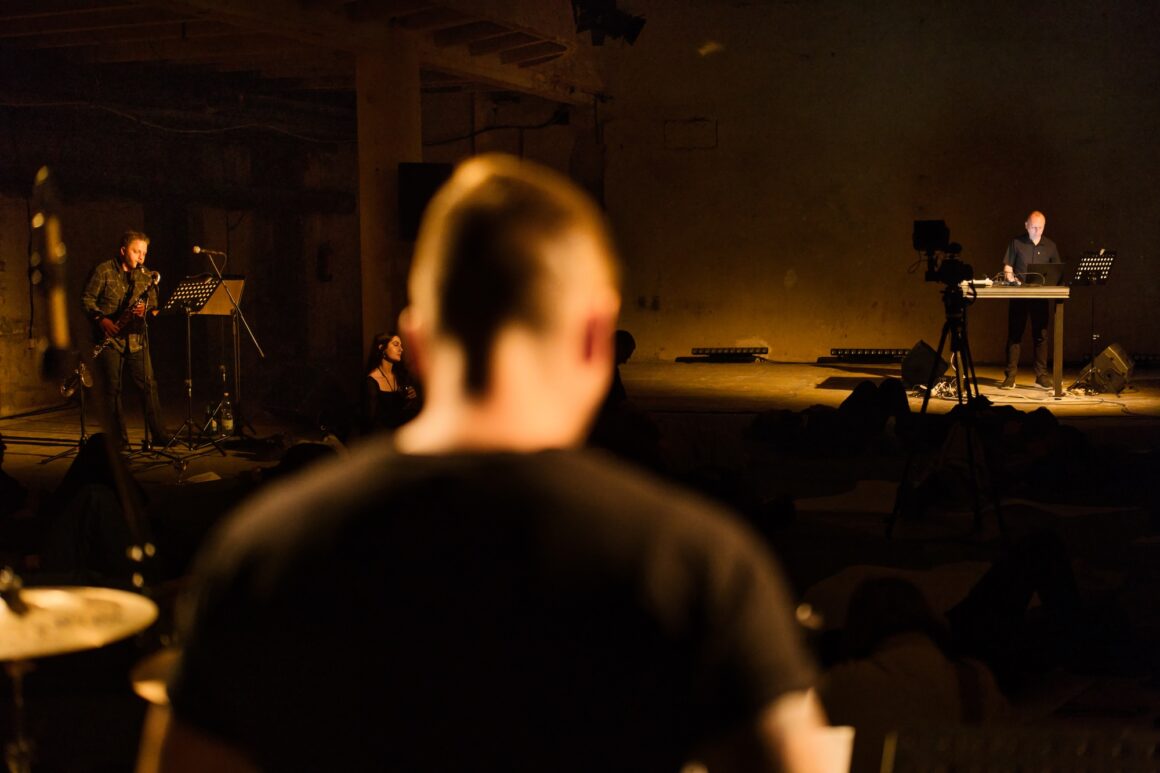
What you describe about the audience arrangements is fascinating because it shifts people away from passive reception into something more fluid and embodied. Those images from the performance in Prague are incredibly evocative — the child moving through the space on someone’s shoulders and the woman lying on the floor with her eyes closed. Those are two entirely different forms of listening, yet both feel deeply engaged. In a conventional concert setting those responses might even seem inappropriate, whereas here they become part of the ecology of the work itself. That’s wonderful!
I also completely understand what you mean about the abruptness of conventional concert culture — that almost violent return to reality when lights come up and applause begins. I very much recognise this in the cinema and there are times when I want to live in that moment just a little longer, even after the credits roll. These moments can actually break a kind of fragile psychological or emotional state that the performance has carefully built. Some of the most memorable experiences I’ve had artistically are precisely those moments where the boundary between art and lived experience becomes porous and difficult to define.
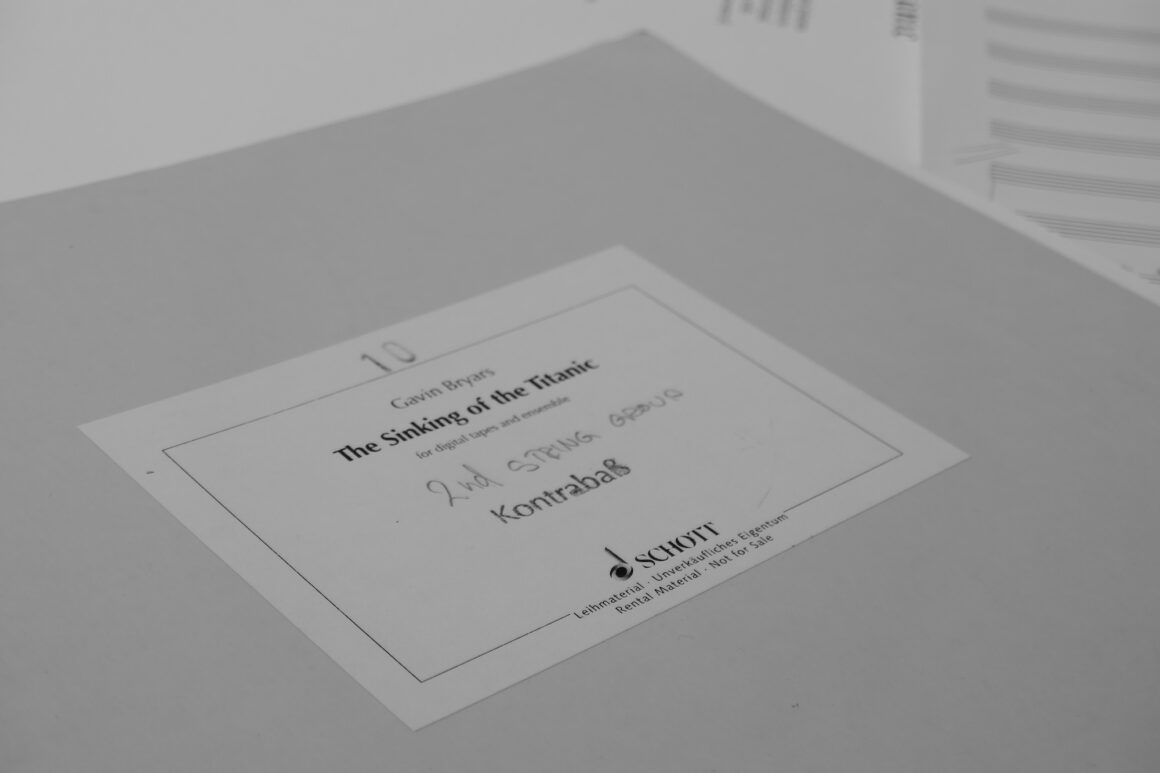
And your thoughts on The Sinking of the Titanic are beautiful. The idea that the piece “begins” with the E-flat on the tubular bells feels technically true, but experientially incomplete. The fading house lights, the sounds from the bar, the residue of the previous work — all of these become part of the threshold into the piece. They shape expectation and attention. In a sense, listening is already underway before anyone consciously acknowledges it.
What you say at the end about existing between interpretation and creation really resonates with me as well. Especially with these kinds of compositions, the performer is never simply reproducing material. You’re inhabiting a set of ideas, almost activating them in real time. There’s a delicate tension between respecting the conceptual architecture of the composer and allowing the work to become alive, unstable and contingent in the present moment. That balancing act is perhaps where the most exciting performances happen. It’s a risk I thrive on and have done so since the beginning of my career.
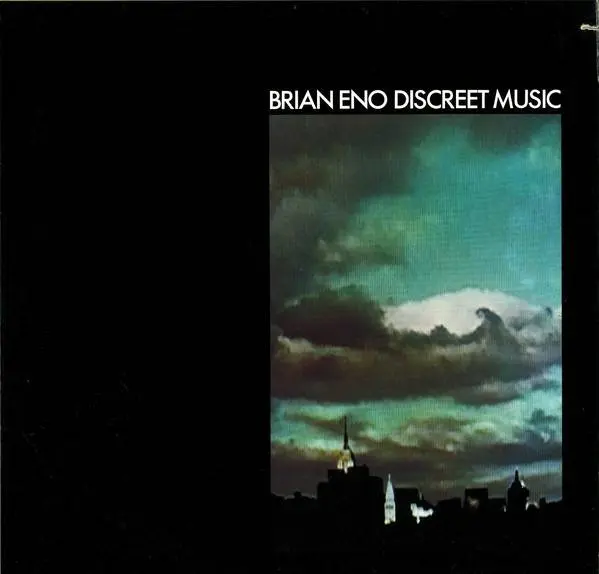
GD: We paired The Sinking of the Titanic with a work by Brian Eno called ‘Discreet Music’. Both are from 1975 and were released on Obscure Records, a label curated by Eno which included works by John Cage, Michael Nyman, Harold Budd, and others. ‘Discreet Music’ exists not as a written score (conventional or otherwise) but as a well-documented piece of electronic music. That being said, the work itself is quite conventional in terms of the musical material it uses, with no reason why it could not be performed on acoustic instruments.
It sometimes feels as though the time and energy people spend subdividing and grouping music into various boxes creates the impression that genres are far further apart than they actually are in reality. Looking back at the Obscure catalogue, it is interesting how Harold Budd and Michael Nyman sit side by side with John Cage and Tom Phillips within the same dramaturgical line. I wonder whether this increasing desire or need to more clearly define every specific type of music — while perhaps useful for cataloguing — ultimately limits what people experience, because they are given the impression that they either will or will not like something before they have even encountered it.
RR: I think that’s absolutely true, and perhaps one of the great strengths of that entire Obscure Records moment. It certainly helped that Obscure Records wasn’t presenting these works as isolated disciplines or protected territories; it framed them as part of a broader conversation about listening itself. So you could easily move from John Cage to Harold Budd or Michael Nyman without feeling there was some insurmountable divide between them. The connective tissue was sensitivity, space, process, duration, atmosphere — not genre in and of itself.
And I think your point about Discreet Music is especially interesting because people often retrospectively frame it as a radical electronic work, when in many respects the musical language itself is remarkably simple, even classical in temperament. What makes it transformative is less the notes than the system around them: repetition, delay, emergence, the relinquishing of direct control. In that sense it sits very naturally beside Gavin Bryars’ The Sinking of the Titanic, where process and gradual unfolding become as important as composition in the traditional sense.

It also raises an important question about notation and authorship. A score has historically been treated as the “real” work, but Discreet Music suggests that documentation, recording, circuitry, and procedure can function as compositional architecture too. The piece exists as an ecology of decisions rather than a fixed manuscript. And as you say, there’s no reason the work couldn’t migrate entirely into acoustic instrumentation and still retain its essence. That fluidity feels important and I feel we’ve demonstrated that in our live performance of it.
I also agree that contemporary culture has become increasingly obsessed with micro-classification. Labels and genres in themselves can be so very restrictive and also sadly mean that some listeners might even miss out on some incredible music simply because of this. Genres can be useful shorthand, of course, but they often become predictive rather than descriptive. Before hearing a note, listeners are already being told where something belongs culturally, socially, even ideologically. That can then close down curiosity.
One of the pleasures of older catalogues like Obscure is precisely their refusal to over-explain themselves. They trusted listeners to encounter unfamiliar work without needing to first determine whether it belonged to ambient, minimalism, systems music, experimental composition, sound art, or contemporary classical music. I personally remember being drawn to these releases at a young age, buying the Eno one and marvelling at the inner sleeve, promoting all the other releases in the series and picking these up over the years. And a couple of years ago I even treated myself to this enormous box set released in a limited edition of every release in the series!
Perhaps what made those records feel so alive, and still relevant today, is that they occupied a threshold space. They weren’t anxiously defending borders but happily sat in a kind of noman’s land, in between all else.. And often the most enduring music emerges exactly there — in those unstable regions where categories blur and artists are simply following an idea to its natural conclusion rather than worrying about what shelf it will eventually sit on.
GD: The word curiosity has come up a few times now. Perhaps unexpectedly, what I am reminded of is a scene in the series Ted Lasso in which he stresses the importance of being curious rather than judgemental. The context was different, but the idea remains the same. For the sake of this discussion I will stick to art and music, but it feels applicable to most things around us. We are surrounded by so much art, in so many forms, and the opportunity is ours to decide whether we wish to judge in advance or approach it with a spirit of exploration.
This feels equally important for both performer and listener. There is always the risk that notated music becomes a series of museum pieces, with performers attempting to replicate rather than re-create. Re-creation need not mean drifting away from fidelity to the original instructions, but rather considering how those instructions are read and understood in a given moment.
In our next concert we will perform a work by Stockhausen called EXPO, one of his process pieces in which he uses signs to guide musical responses, suggesting how to transform dynamics, density, and other parameters. As a teenager, one of the things that fascinated me about Stockhausen’s work was the extent to which his instructions seemed aware of future developments in technology and interpretation. There was no attempt to hide from the fact that the technologies and sounds of the time would change, and that many of those changes would emerge in completely unforeseen directions.

The works remain complete works; they retain their identity and structure. Yet this willingness to consider what might be, what might happen, and to retain a sense of curiosity has always stayed with me. No doubt I have added elements of my own interpretation to that understanding over the years, but it remains an approach that allows us to find spaces within the constantly shifting relationships between past, present, and future.
RR: Curiosity is, well, a most ‘curious’ thing! What strikes me is that curiosity requires a degree of humility. To be curious is to accept that you don’t yet know what something is, or what it might become. Judgement, by contrast, often closes the door before an encounter has really begun, and in music especially, I’ve always felt that the most rewarding experiences often come from works that initially resist understanding. If we approach them with patience rather than expectation, they can reveal themselves in unexpected ways. I thrive on the ’not knowing’ in a sense.
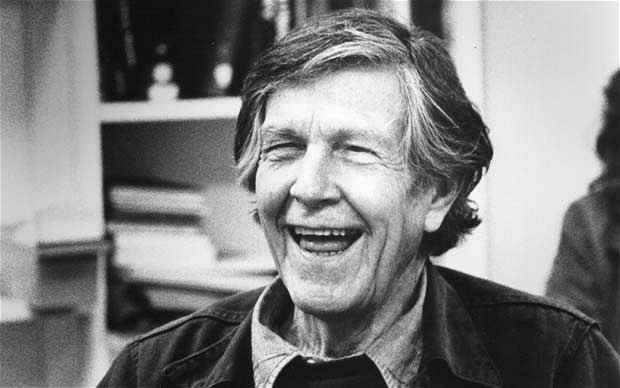
What you say about performers is equally important. There is a danger that certain works become fixed in cultural memory, almost fossilised by repeated interpretation, and that’s something I absolutely drea. The irony is that many composers we now regard as canonical were radical experimenters, constantly questioning established practices. To treat their work as something static can sometimes feel contrary to the spirit in which it was conceived. I sometimes shudder at performances of Cage’s works, especially the silent work, 4’33,” which is frequently delivered in such a heavily alienating and academic manner that it leaves me cold. Watch any interview with Cage and his laughter is infectious, and there’s so often a joy in his work, but so many performances of his and 20th century composers are beyond dry!
That’s one of the things I’ve always admired about Stockhausen too. The process pieces don’t simply prescribe sounds; they prescribe modes of thinking and listening and aren’t restricted to a time or a place.. In works like EXPO, the instructions generate a framework within which the music continually renews itself. The identity of the piece remains intact, yet each performance becomes a negotiation between the score, the performers, the technologies available, and the circumstances of the moment. And once again, we are thrown into the unknown!
Your observation about technology is particularly interesting. Looking back now, it feels as though Stockhausen understood that musical tools would evolve in ways nobody could predict. Rather than tethering his work to a specific sound world, he often created systems that could accommodate future possibilities. In that sense, the pieces remain remarkably contemporary because they aren’t dependent on a particular era’s technology; they’re dependent on a way of engaging with change.
And perhaps that’s where curiosity becomes such a central theme. It’s not simply curiosity about new sounds, but curiosity about what happens when a work moves through time. How does a score written decades ago speak differently today? How do performers bring their own experiences to it without diminishing its essence? The most exciting works seem to thrive on those questions. They exist in a continual conversation between past intentions and present realities, never entirely settled, always open to discovery. It also explains why so many composers, Cage in particular, never wanted to hear or make recordings of work, to ‘fix’ them permanently, but rather to let them grow and be constantly surprised.
More on Klang Systematiek
Photos by Marek Bouda






1 comment
Robin’s remark on the porosity of the boundary between art and lived experience reminded me of Philip Davis”s wonderful book, Reading for life (Oxford University Press, 2020), a book based on the experience of shared reading groups held in settings like rehab centres, prisons, care homes and community centres. One of the title’s meanings, Davis explains, is reading
for the glimpsed sense of the books’ relation to the lives and thinking of their readers, blending into an almost musical system of interrelated resonances, the time of reading in the foreground with the reader’s own lifetime in the back, like a poem itself. (p.6)
It is striking that Davis reaches for a musical metaphor to describe what can happen in the interpenetration of art and life. I think he’s paying homage to an ability many people have (given the right conditions) to read musically, or songfully, i.e. to listen responsively to the text of a book instead of trying to ‘understand’ it. Ironically, those conventional concert settings which you both seem to dislike are too often designed for reading music precisely as if it were a text to understand.